Monday, January 29, 2024

Berbers houses

Berbera (burr-burr-AH; Somali: Barbara, Arabic: بربرة) is the capital of the Sahil region of Somaliland and is the main sea port of the country, located approximately 160 km from the national capital, Hargeisa. Most of thees houses are abandoned and empty.


https://www.pinterest.com/pin/485755509794511003
https://www.flickr.com/photos/mytripsmypics/6504574353/in/photostream/

Matudji ma nzagu


It means the ears of the elephant in ypunu of Gabon. Why this name? We don't know, it may be because of its shape which gives the impression of the elephant's widely open ears. It is a covered space without walls. It also looks like it is a roof supported by posts and without a wall. It is often a construction erected at the camp to meet an urgent need which may be the smoking of fish or meat during fishing or hunting campaigns. It can be built in the village to serve as a hangar for public meetings.

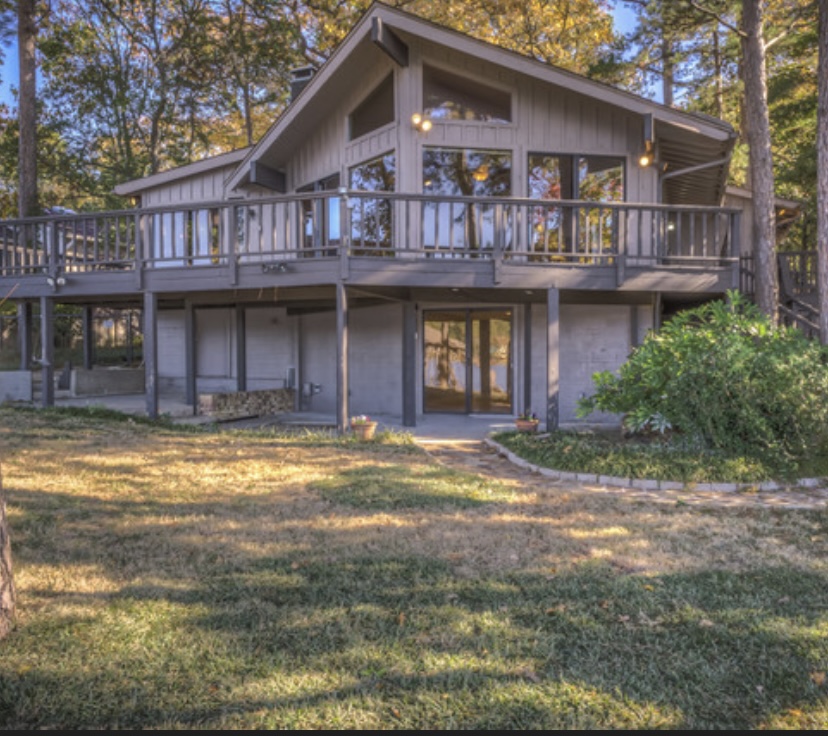
Wooden House

 Very marvelous!


Kashbas ,Kashba, cashba Ait Benhaddou, Morroco

 The kashba are fortress that we find in North Africa. The Kashbah belongs  is a heritage cultural of Africa.

https://thehistoriantraveller.com/morocco-road-of-a-thousand-kasbahs/


ust south of Marrakesh’s city center is the neighborhood of Kasbah. This laidback district welcomes all through one of the 19 gates of Medina, the Bab Agnaou.


June 2022, Little Venice seen from Mykonos Windmills, Chora, Mykonos, Greece.


https://www.booking.com/hotel/ma/kasbah-hnini.html

German Architecture


Typical house in Menes in Morroco

 A Riad is a traditional Moroccan house or palace with an indoor garden and courtyard. They are located within the old city “Medina” walls. Generally, the Riad is fully enclosed inside, insulated with high-strength, neutral walls and with minimal vents to keep out heat and street noise…


Colonial Style


 South Africa

The small, unevenly placed, casement windows, steep gable roofs, shed dormers, plain white plastered interior, winding stairs, and center chimneys are all indicative of medieval German building traditions.


East Africa

 North East , the Nubian style. The east africa in the sead region.The zimbabwes (“stone houses”) built in the 17th and 18th centuries by the Rozwi kings of southern Central Africa were royal kraals, an example being the citadel of Chief Changamire at Khami, Zimbabwe. Ruins at Regina, Nalatali, and Dhlodhlo (also in Zimbabwe) all display fine mortarless stonemasonry worked with chevron patterns and banded colours. Many African palaces were larger and often better-crafted versions of the traditional dwelling type, raised on hillocks or plinths. Such were the palaces of the kabaka (king) of the kingdom of Buganda, including the great barnlike thatched dome with an open reception veranda at Mengo, near present-day Kampala, Uganda. Other palaces were royal compounds, such as that of the fon (chief) of Bafut, Cameroon, which within a high fenced enclosure contained separate quarters for the older and younger wives, dormitories for the adolescent sons, houses for retainers, stores, meeting places, a shrine house and a medicine house, burial structures for former chiefs, and structures for secret societies.


On the east coast of Africa, Islamic influence began with the establishment of the dhow trade, which, relying on the trade winds, linked East Africa with the Arabian and Persian Gulf ports and with India. Kilwa, an island port that flourished between the 12th and 15th centuries, was built largely of stone, as were Zanzibar (where the mosque at Kizimkazi has a 12th-century inscription), Dar es Salaam, Malindi, Mombasa, and other ports and city-states built by Swahili- and Arabic-speaking traders along the Tanzanian and Kenyan coast. With the coming of the Portuguese at the close of the 15th century, the east-coast towns were plundered and burned. Only the northerly island port of Lamu, Kenya, retains the character of the Swahili town. Built of coral ragstone, roofed with mangrove poles, and covered with rag and lime mortar, the houses have fine plasterwork, decorative rows of niches, and deeply carved doors.

South Africa Region


In Southern Africa, the Zulu, the Swazi, and, in KwaZulu-Natal province, South Africa, the Nguni construct frame domes, using concentric hoops. Others make a ring of poles inserted into the ground and brought together in a crest, either as a continuous curve (early Xhosa) or to a point (Sotho). These structures are expertly thatched; the Zulu domes, or indlu, have finely detailed entrances. Some Nguni types have layers of mats beneath for insulation, the covering thatch being brought to a decorative finial and the whole held down with a grass rope net to withstand strong winds. Savanna kraals and compounds Later houses of the Xhosa tend toward a consistent form—the rondavel, or cylindrical, single-cell house with a conical thatched roof. This type is prevalent throughout Southern Africa. Variants in the region include a low plinth or curb supporting a domed roof (some Swazi and Zulu), flattened domes or low-pitched cones on head-height cylinders, and high, conical roofs. Methods of construction also vary, though a common method is a wall with a ring of posts and infilling of wattles or basket weave packed and plastered with mud. Rings of posts may have packed earth infilling, and in more wooded regions walls may consist mainly of timber posts. Some southern peoples, including the Venda of northeastern South Africa and the Tswana of Botswana, build veranda houses with deep, thatched eaves supported by an outer ring of posts. The units are traditionally single-cell, undivided, and illuminated only from the doorway. Additional living space may be claimed from the exterior, with a semipublic space in the front and a private space, with hard-packed earthen floor, at the rear of the dwelling being used for food preparation, cooking, and other domestic occupations. Both spaces are bounded by a low wall. In many areas houses are dispersed; in others the kraal, with huts ranged around the perimeter of a large cattle enclosure (as among the Ila of Zambia), serves a defensive function against raiders and predators. In Namibia the kraal of the Ambo (Ovambo) people had an outer concentric ring leading to cattle pens, an inner fenced meeting place, and subdivisions for wives’, visitors’, and headman’s quarters.


Central Africa

In some coastal regions, such as that occupied by the Duala in Cameroon, Mpongwe in Gabon houses were constructed of bamboo, though they are mud-plastered. Bamboo—which grows to heights of more than 49 feet (15 metres) in Gabon,  Angola, the Republic of the Congo, and parts of Central Africa—is used by many peoples as a building material. Its straight stalks, used as screen walls, are lashed with thin wood strips to produce crisp rectangular houses with peaked thatched roofs, as among the Nyakyusa of Tanzania.


  Bamboo construction reached its apogee in the tall houses of the Bamileke and other peoples of western Cameroon, who constructed steep prefabricated pyramidal roofs raised on platforms with verandas; the whole structure frequently reached 33 feet (10 metres) or more, with male and female ancestor figures often flanking the doors. Tall conical houses, made of bamboo poles joined at the crest and then leaf-thatched, were built by the Ngelima and the Panga of the Democratic Republic of the Congo.


https://www.designboom.com/architecture/pyramid-hipped-roof-wooden-cabin-chinese-woodland-wiki-world-02-22-2023/

Raffia palm is also used by the Gabonese, Bamileke and the neighbouring Bafut and is an important material among the Kongo of Angola and the Bushongo of the Democratic Republic of the Congo. The most impressive of these structures are the rectangular, pitched-roofed meeting halls of the Mangbetu of Congo; their houses are of the cylinder-and-cone type, mud-plastered and geometrically decorated.


 https://www.bloggingpro.com/best-fonts-for-blogs/#gref

https://charisyear2.weebly.com/project-4-title-learn-making-knowledge-mini-school-tectonic-environmental-approach/roof-design https://restorbuilders.com/roof-types/